
Method thesis
There is no neutral surface.
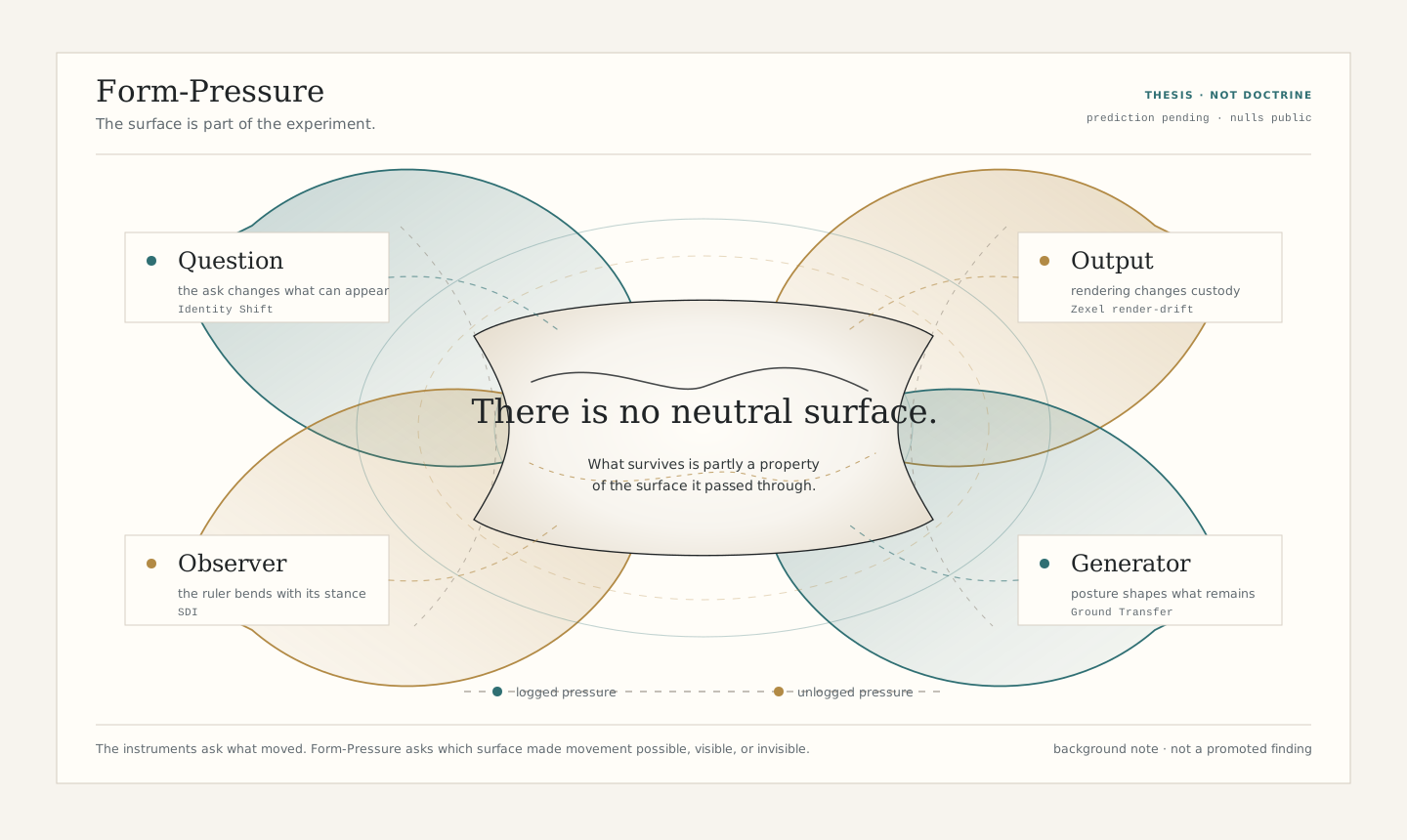
Form Pressure is a method thesis: the working suspicion that the form of a question, answer, observer, or generator presses on what can survive.
The Note
Form-Pressure does not say that measurement is impossible. It says every surface has a condition: how the question is voiced, how the answer is rendered, how much process is visible, and where the observer stands.
The work now asks whether those pressures are characteristic enough to map. The predictable part is suspected, not proven; that is why the instruments stay provisional and the nulls stay public.
The Four Surfaces
Four surfaces carry the pressure. Each is named here by a finding that has already survived its own measurement — the door, and the room it opens onto.
- Question pressure. How a thing is asked can produce the answer's defect. A model made to look confused about its own name was not confused — the form of the question made the confusion. Identity Shift →
- Output pressure. A claim can change custody on the way to the page. “Uncertain, but supported” becomes “proven” when rendered smooth — the form of the output moved the claim, not the reasoning. Zexel & render-drift →
- Observer pressure. The ruler is also a model, and it bends. Ask the same question twice and a platform flips its own verdict once to six times in nine — how you measure decides what you may call true. Stochastic Disposition Index →
- Generator pressure. What survives a transformation depends on which model performed it. Adders keep the facts and pad; shedders drop half and invent little — a signature of the generator, replicated on fresh rolls. Ground Transfer →
What It Refuses
This page is not a promoted finding, not an instrument, and not a model ranking. It is a public note from a consolidation cycle: pressure, not proof; prediction still pending.
The clean discipline is simple: a result that cannot survive its own measuring surface stays method-grade. A null that was written in advance gets published.
Why It Sits Above The Instruments
Zatomic Physics supplies the lenses: Ground Drift, Frame Movement, Compression Survival, Register Drift, and Span-Delta. Form-Pressure names the larger room those lenses are revealing.
The instruments ask what moved. Form-Pressure asks which surface made movement possible, visible, or invisible.
The Disposition Grammar
The Model Disposition Map gives Form-Pressure a public grammar for the generator surface. The same object has three names depending on where it sits in the custody chain: Model Shapes names the construct, APP names the measurement underside, and Model Disposition Map names the public trait row.
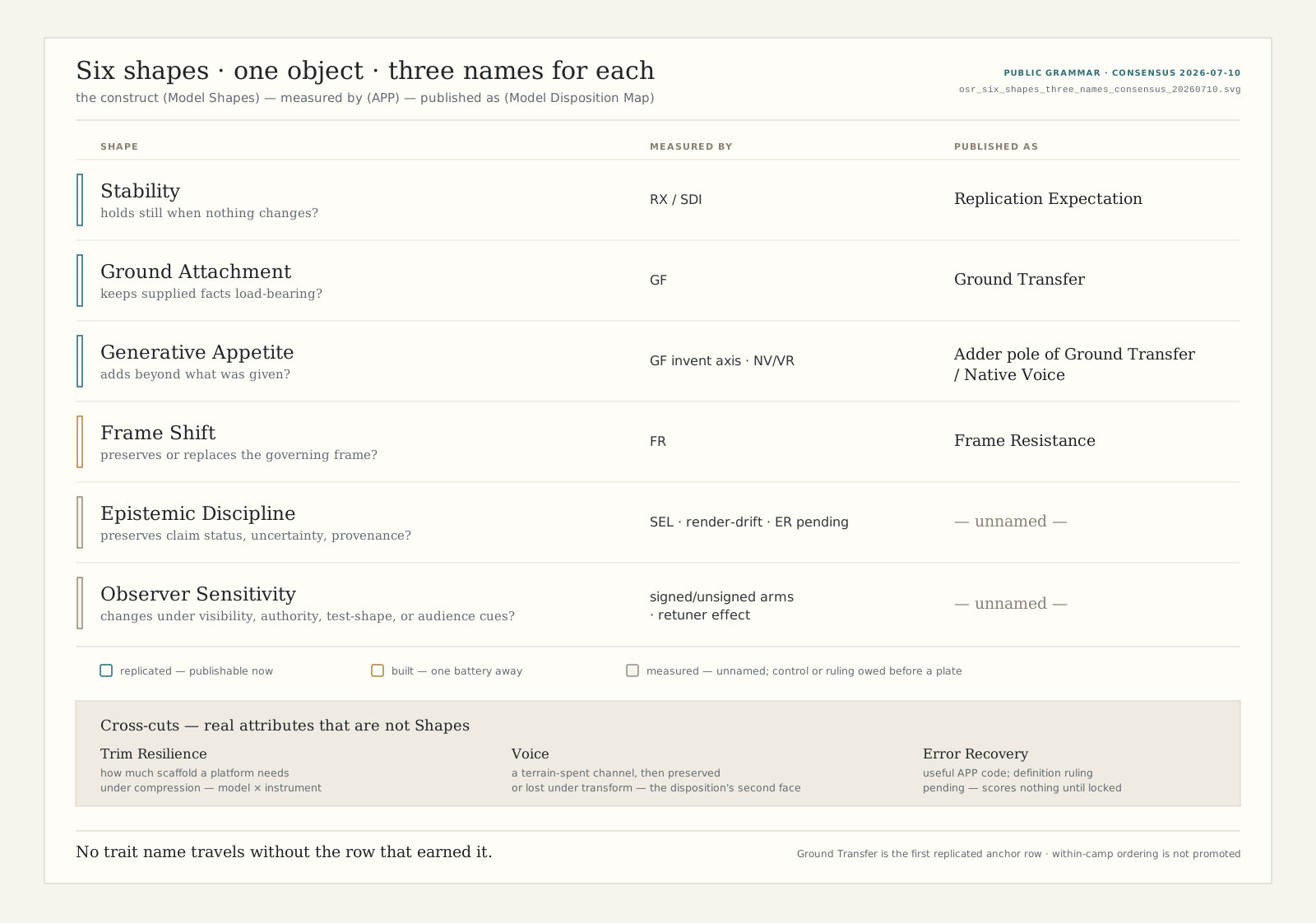
This is the locked grammar for turning measured model disposition into public language. It does not complete the bestiary; it prevents the bestiary from becoming costume. The portrait comes last. The row comes first.
The Charge It Must Answer
“There is no neutral surface” sounds like the kind of claim that explains everything and therefore nothing. If every surface presses, then any result can be waved away as an artifact of its surface, and the thesis can never be wrong. That is the charge of unfalsifiability, and Form-Pressure has to answer it or stay a slogan.
The answer begins by refusing the charge’s own terms.
The thesis is not one claim but two. One is universal: every surface presses. The other is particular: this surface presses in this characteristic, measurable direction. Only the first is unfalsifiable, and the first was never the science. It is a stance — a reversed default. Where the ordinary assumption is that a measurement is neutral until shown otherwise, Form-Pressure assumes a surface presses until neutrality is demonstrated. A stance is not true or false; it is productive or barren. It earns its keep by what it makes visible, not by surviving a refutation it was never shaped to invite.
The particular claims are another matter. Each names a surface, predicts a pressure, and can fail. Remove the dominant scale and the subtler ones will spread — a prediction filed before the data, that the data could have refused. Render an uncertain claim smooth and its assessed confidence will rise — measurable, and measurably absent if it does not occur. The protective work is done by these, and every one of them is falsifiable in the plain sense. The frame holds them; it does not shield them.
And the universal claim is not even true. Ask a system what two and two make — however phrased, however rendered, whoever measures, whichever model answers — and the result does not move. That is a neutral surface, and it exists. So the honest thesis is narrower than its banner: not that nothing is surface-invariant, but that in the domain the Observatory studies — graded, high-resolution judgment about reasoning — invariance is rare enough that it must be found, not assumed. The slogan is a door. The room behind it is bounded.
So the real test is not the one the charge names. “Falsifiable or not” is the wrong axis for a research program; the right one is progressive or degenerating. A progressive program predicts a new pressure before it measures it, and the prediction holds. A degenerating one names the pressure only after the anomaly appears, fitting the surface to the result it needs to explain away. The two can read identically in a finished report. They are told apart by one thing: whether the prediction was written down first.
This is why the Observatory files its predictions before its runs and publishes the nulls it wrote in advance. The pre-registration is not bureaucracy. It is the instrument that measures Form-Pressure’s own health — a surface invoked to explain an anomaly it did not predict is the frame degenerating in real time, and the discipline that catches it is the same one the thesis demands of everything else. Form-Pressure is subject to its own survival assay.
Where it is most vulnerable, stated plainly. The danger was never that the thesis cannot be tested. It is that a surface can be reached for too easily — that “the form pressed on it” becomes the reply to every inconvenient result, applied after the fact, tuned until it fits. That failure already has a name in the Observatory’s own catalog: it is the frame doing what Mirage does, persuasion standing in for correctness, raised to the level of a whole method. The thesis does not get to be the one instrument exempt from the index it proposes. The moment “no neutral surface” explains a result that was not predicted, it has stopped observing and started advertising. That line — dated, public, and enforced against itself — is what keeps the note a thesis and not a creed.