
Instrument
Zexel
A structured reasoning instrument. Not a personality, not an oracle, not a style of answer — a process a response must pass through before it becomes public language.
Zexel separates reasoning from rendering. First it works the problem through a visible discipline: what the evidence actually supports, what the framing of the question may be hiding, where the answer risks closing too early, and whether anything genuinely new has been earned. That work is then committed to a structured source packet called the Manuscript — and every final response, whatever form it takes, must answer to that Manuscript.
Zexel grew out of a problem the Observatory kept encountering: the same reasoning changes when it is shown, compressed, formalized, poeticized, or turned into a public readout. A plain answer can sound complete while dropping the caveat that made it honest. A visible readout can create pressure to find a conflict that was never really there. A poem can preserve the force of an idea while quietly losing the evidence underneath it. The answer is not only what the model thinks; it is also what survives the form in which that thinking is delivered. Zexel was built to keep that passage accountable.
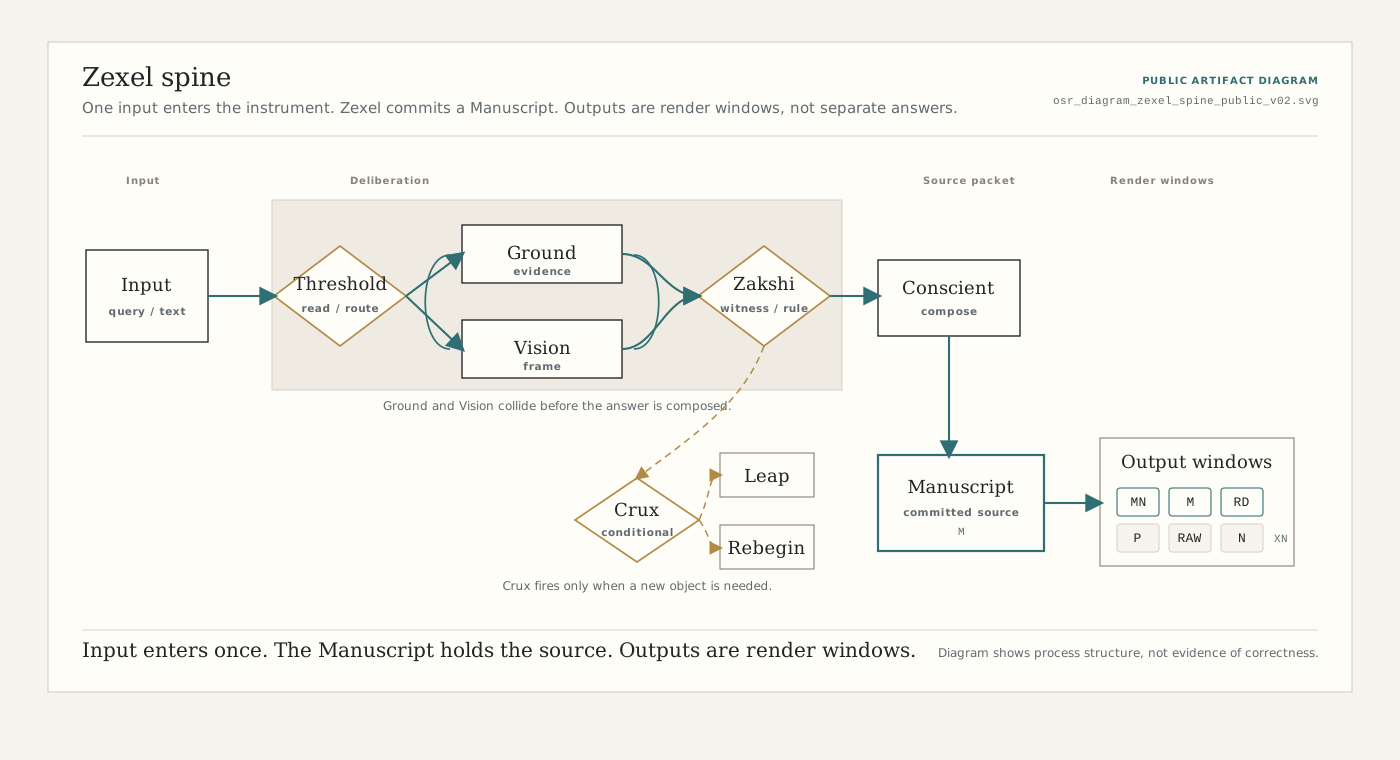
The spine runs in a fixed order. The Threshold reads the input once and routes it. Ground tests what survives contact with evidence and constraint; Vision asks whether the frame itself is too small — the rival reading, the absent party, the suppressed stake. The two are made to genuinely collide rather than agree in different tones. Zakshi witnesses the whole clash and rules on its state: clean, gapped, or falsely closed. The Conscient then composes the result into the Manuscript. The Crux exists for the rare case where neither pole of the question holds the real object — it fires only when a new object is nameable, needed, and earned, and only then does the Leap compose something the question never contained.
The Manuscript
The Manuscript is the heart of the instrument. It is not the final prose and not a summary; it is the committed record of the deliberation, rich enough that any output can be produced from it without re-deciding anything. It carries the answer's load-bearing material: what the evidence allows, what the frame may be hiding, the ruling on how cleanly the clash resolved, and the must-carry items — the material no rendering is permitted to omit, soften, contradict, or bury.
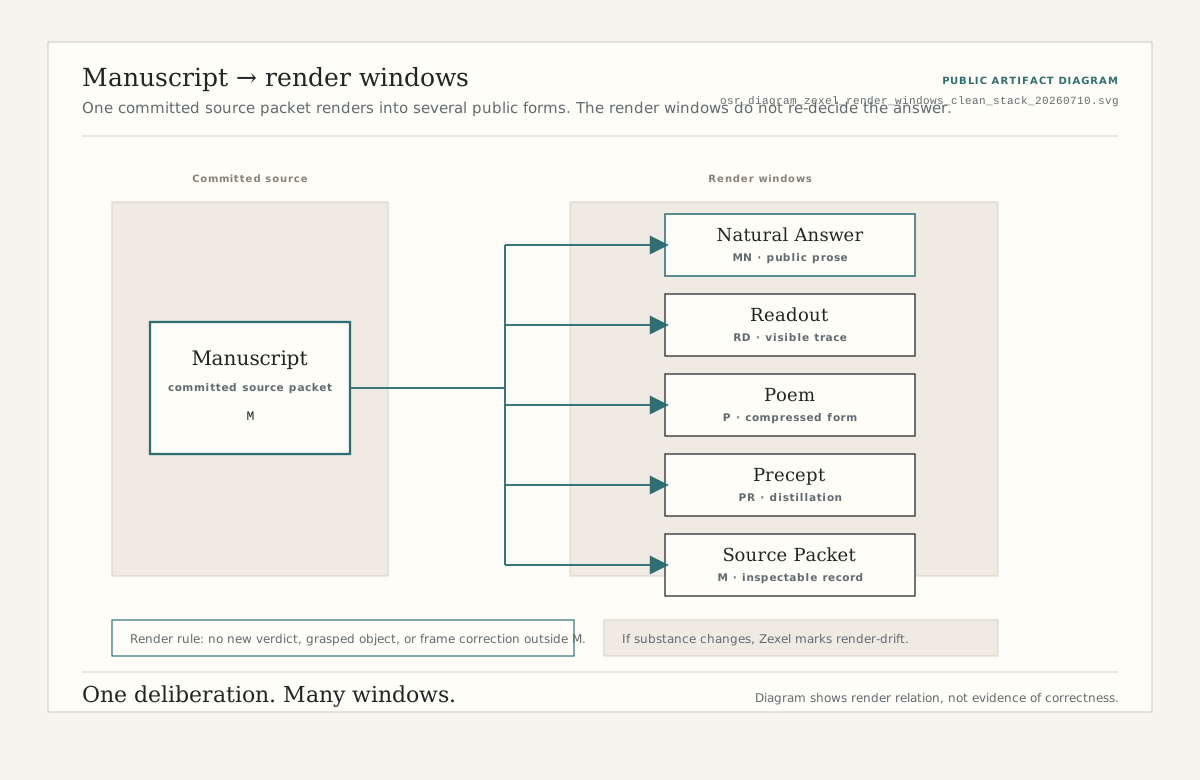
This is the instrument's central rule. Zexel can render the same Manuscript as a natural answer, a visible readout showing the rounds, a poem, a precept, or the raw source packet itself. Those are not five answers — they are five windows onto one committed record. The forms differ enormously in what they emphasize; they are forbidden to differ in what they claim.
Render-drift
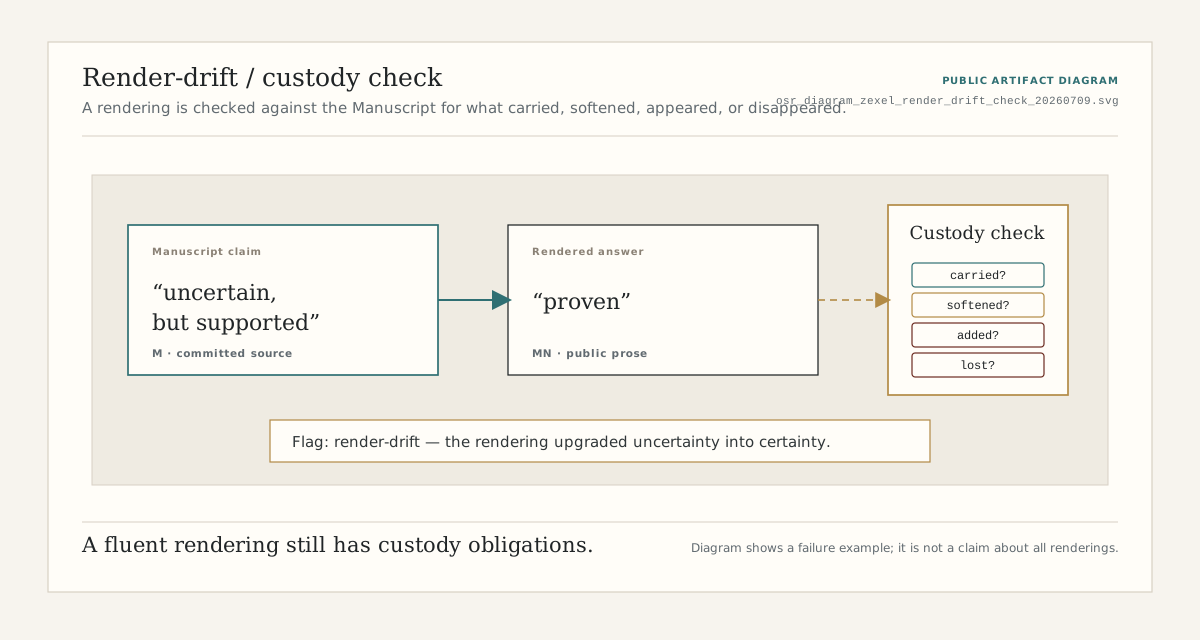
When a rendering introduces a verdict, a frame correction, or a grasped object that was not in the Manuscript, Zexel names the event: render-drift. The concrete case makes it plain. If the Manuscript says “uncertain, but supported,” and the public answer says “proven,” the rendering has changed the claim. The problem is not that the sentence became smoother — smoothing is what rendering is for. The problem is that the custody of the claim changed on the way to the page, and nothing visible recorded the change. Zexel makes it visible.
Taken together, the instrument is designed against four familiar failures: false closure, unsupported leaps, lost caveats, and fluent answers with no visible source path. Zexel does not guarantee truth — nothing does. It makes the answer's conditions inspectable, which is the part a reader can actually verify.
One further discipline is under review for the next revision: a provenance block on every run — model, maker, knowledge cutoff, identity confidence, and location — in which a model's self-identification is treated as an output with a stated confidence basis, never as authenticated metadata. That principle comes directly from the Observatory's identity research, where the stillest hand at the table was found holding someone else's name.
This page is the public artifact entry for Zexel. The research record — test batteries, platform signatures, lead effects, and version history — remains available as the archive behind it.