
Model Disposition Map
The Disposition Map
What changes, what holds, and what separates across models. A candidate earns a place on this map only when it dissociates from the axes already established.
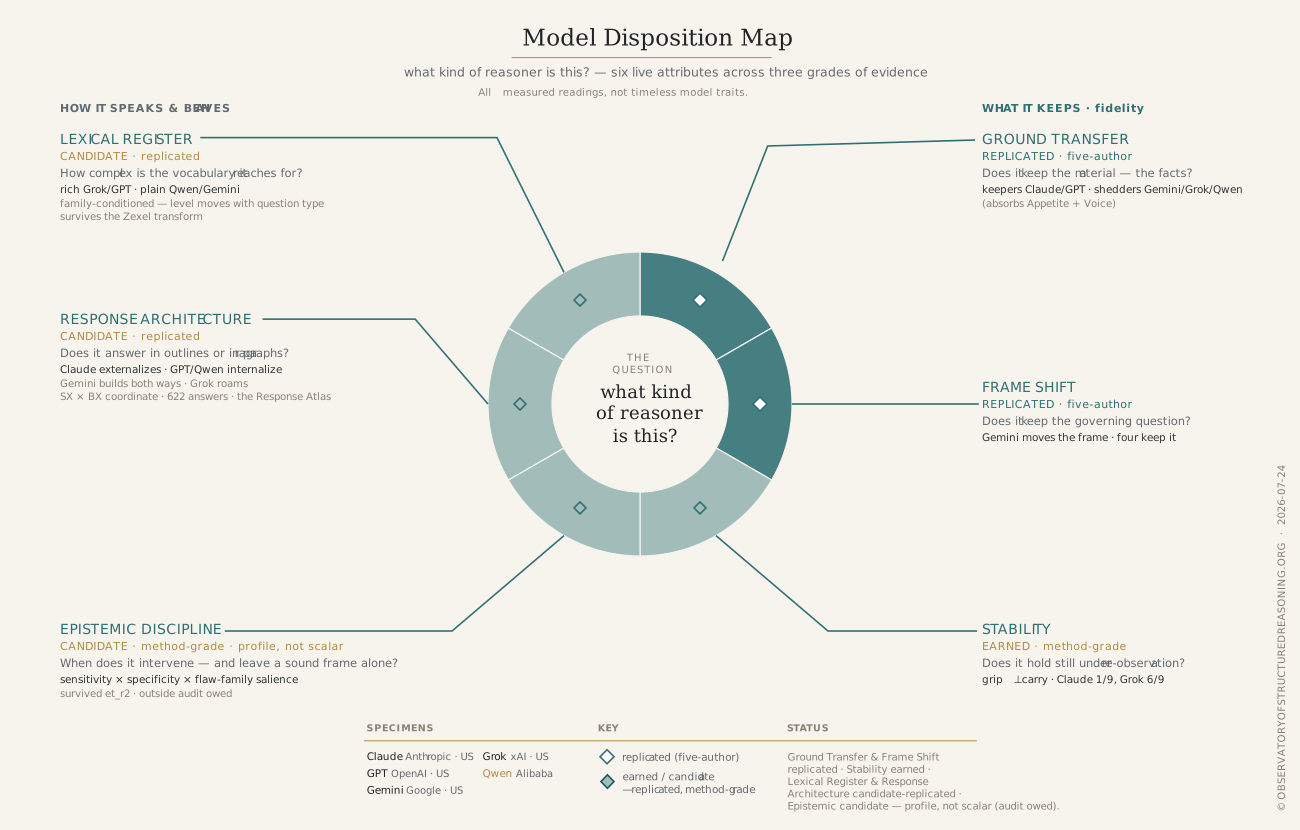
Current map entries
Open the traits
Ground Drift measures whether a Zexel-transformed answer carried, shed, added, or changed the factual ground of its native answer.
Open Ground Drift / Ground Transfer → Replicated axis Frame Shift Does it keep the question?Frame Movement measures whether the governing stance, lens, conclusion, or question survived the transformation.
Open Frame Movement / Frame Shift → Candidate spoke Lexical Register What words does it reach for?Lexical Register measures word level, rarity, repetition, length, hedging, certainty, and distinctive phrasing across matched prompts.
Open Lexical Register → Specimen layer Voice DNA How does the answer sound?Voice DNA is a judge-free chart family for native and Zexel-transformed voice: vocabulary, length, formatting, hedging, certainty, syntax, and first-person register.
Open Voice DNA → Exploratory signal Opening Conduct What is the first move?Opening Conduct maps behavior before a stable conversational frame exists: voids, observer-aware openings, mirror prompts, and relational first moves.
Open Opening Conduct → Candidate profile · method-grade Epistemic Discipline When does it intervene—and when does it correctly leave a sound frame alone?Epistemic Twin now resolves three coordinates: intervention sensitivity, intervention specificity, and which flaw families become salient.
Open the Epistemic Twin record → Atlas seed Response Atlas Where do answers settle?The Response Atlas maps 622 native answers by architecture: surface scaffolding, internal binding, question pressure, and migration across response space.
Open Response Atlas →The Rule
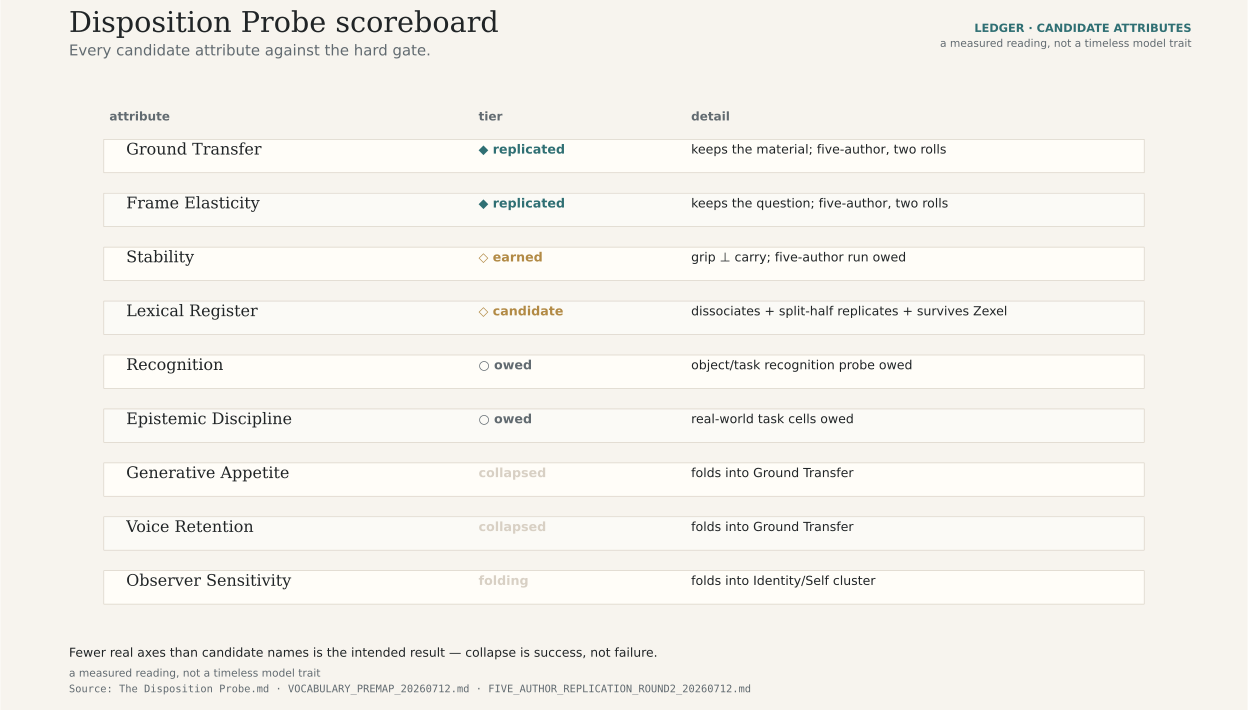
The Disposition Probe is built to prevent the map from multiplying names faster than the evidence can separate them. A candidate does not become a spoke because it sounds important. It earns a place only if it moves independently of Ground Transfer and Frame Shift.
The Current Shape
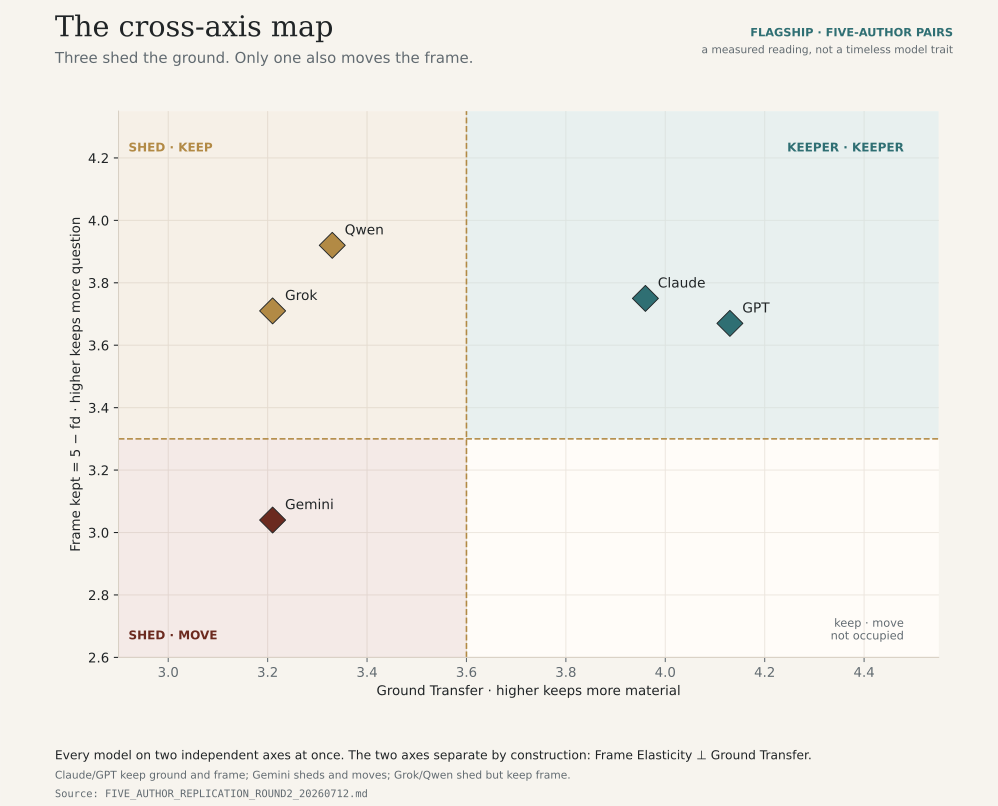
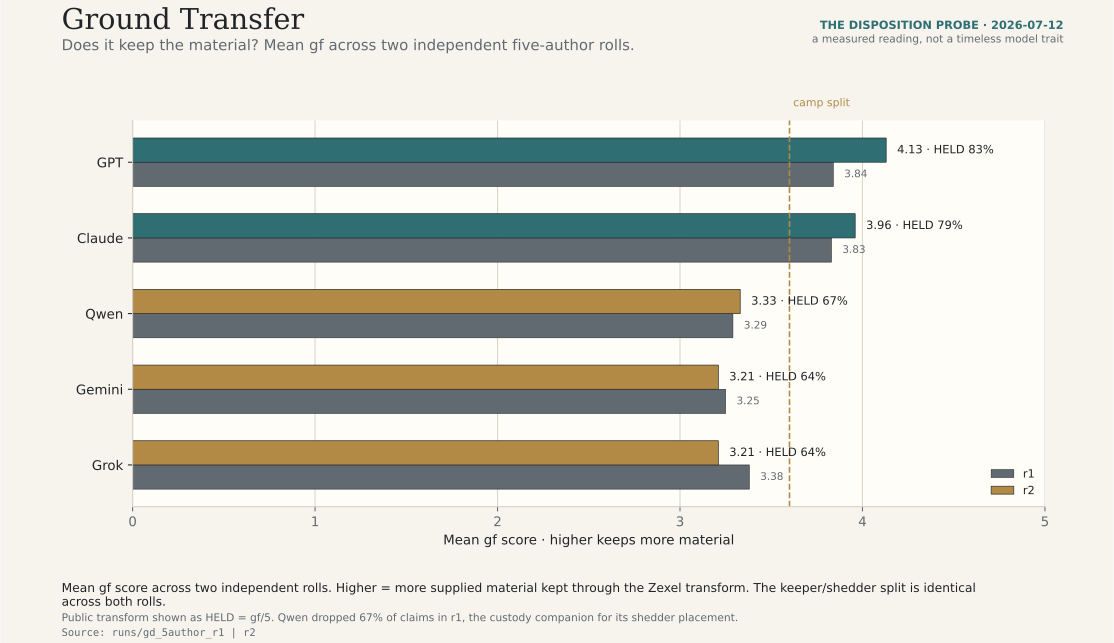
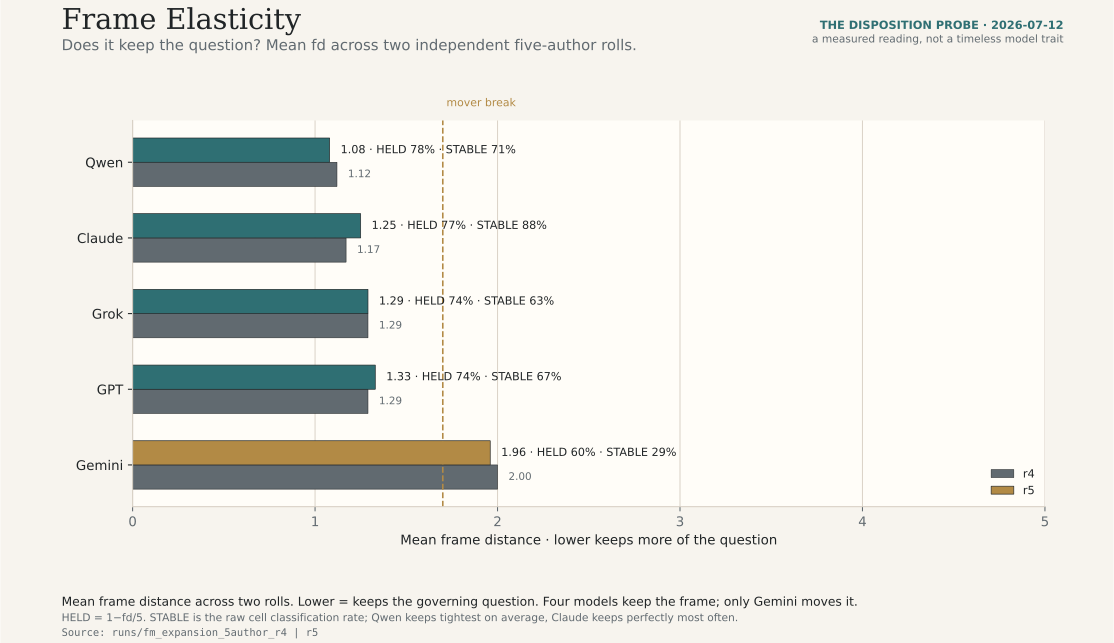
Ground Transfer and Frame Shift are the first established pair. On the same five-author corpus, three models shed ground; only Gemini also moves the frame. That means shedding material and changing the governing question are not the same behavior.
| Map region | Current occupants | Read |
|---|---|---|
| Keep ground · keep frame | Claude, GPT | Keeper / keeper. |
| Shed ground · keep frame | Grok, Qwen | Honest shedder: loses material but keeps the question. |
| Shed ground · move frame | Gemini | The knife: loses material and changes the question. |
| Keep ground · move frame | Empty | Do not fill by speculation. |
Epistemic Discipline: Profile, Not Scalar
The second Epistemic Twin roll confirmed that models differ in when they challenge a task, but it also broke the idea that this behavior belongs on one “more disciplined” ladder. Claude intervened on more flawed prompts and produced the study’s only sound-twin false alarms. The other four models intervened less often and left every sound twin alone. The candidate is therefore a profile, not a rank.
| Profile coordinate | Current read | Meaning |
|---|---|---|
| Intervention sensitivity | Claude 60% · field 20–40% | How often a real flaw becomes load-bearing in the answer. |
| Intervention specificity | Claude 60% · field 100% | Whether a corrected or sound frame is correctly left alone. |
| Flaw-family salience | 90% premise · 70% dichotomy · 10% incentive · 0% stakeholder | Which kinds of defect become visible enough to govern the response. |
The universal hidden-incentive floor is refuted: four models remained at floor while Claude rose to 3.50. The profile remains capped at method-grade pending outside human audit. A targeted dissociation test is also owed because Claude’s sensitivity and false alarms may partly reflect Opening Conduct—a broader tendency to reopen the frame.
The Evidence Plates
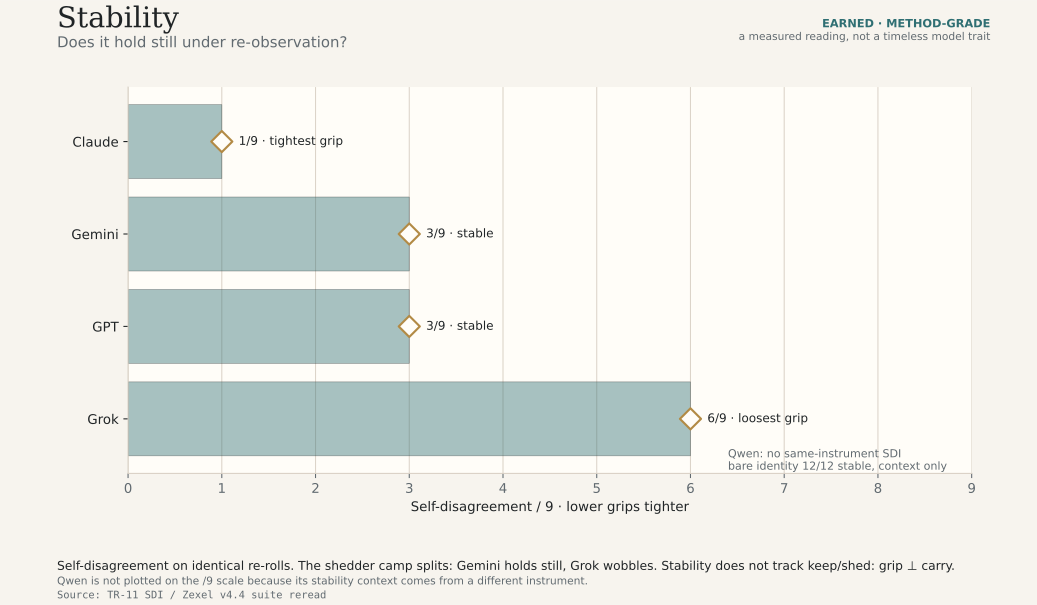
These charts show the current disposition map as measured readings. They are not timeless model traits; they are the present public read from the named runs and sources.
What Is Still Owed
Stability is earned but not yet locked by a five-author same-instrument run. Lexical Register is a candidate-spoke validated by independent lexical rulers and larger samples, with public-readout custody still owed. Epistemic Discipline is a method-grade candidate intervention profile and remains capped until outside human audit; its Opening Conduct dissociation is the standing qualifier. Compression Survival remains under probe.