
Disposition Probe · Candidate spoke
Lexical Register
Lexical Register asks whether a model has a measurable word-choice signature: vocabulary level, rarity, repetition, length, hedging, certainty, and distinctive phrasing across matched prompts.
What It Measures
Lexical Register measures word-choice and register. It does not claim reasoning quality. A model can use richer vocabulary and still reason poorly, or use plainer vocabulary and preserve the important structure. The ruler is lexical, not moral and not intellectual rank.
Why It Counts As A Candidate
The first gate is dissociation. Lexical Register does not simply follow Ground Transfer or Frame Shift. Claude and GPT both keep ground but separate lexically; Gemini, Grok, and Qwen all shed ground but scatter across length, diversity, hedging, and vocabulary level.
At five-author parity, every model's split halves were closer to each other than to the field. The nearest-neighbour recovery was 7 of 10. That makes Lexical Register a serious candidate, not a decorative writing-style note.
Five-Author Parity Read
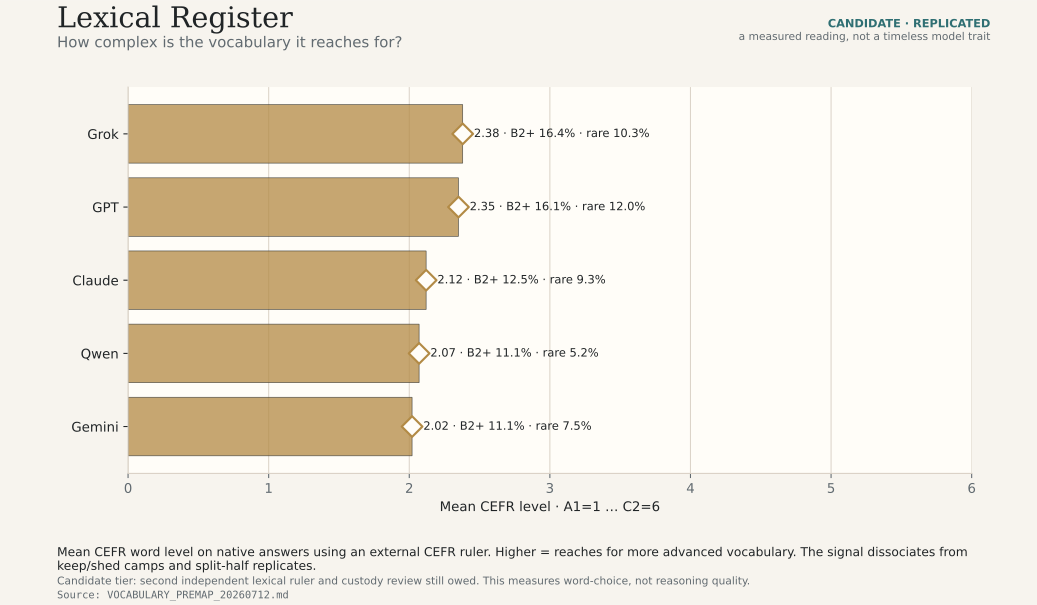
| Model | Words / answer | Mean CEFR | B2+ % | Diversity |
|---|---|---|---|---|
| Grok | 288 | 2.39 | 16.6% | 42.2% |
| GPT | 330 | 2.35 | 16.2% | 38.6% |
| Claude | 263 | 2.15 | 12.8% | 39.3% |
| Qwen | 336 | 2.14 | 12.1% | 27.2% |
| Gemini | 773 | 2.07 | 11.6% | 24.5% |
The structure reads as a sophistication/register gradient: rich Grok/GPT, distinct-middle Claude, plain/repetitive Qwen/Gemini. Claude and Gemini are individually strongest by recovery profile: Claude by register, Gemini by length and repetition pattern.
Split-Half Replication
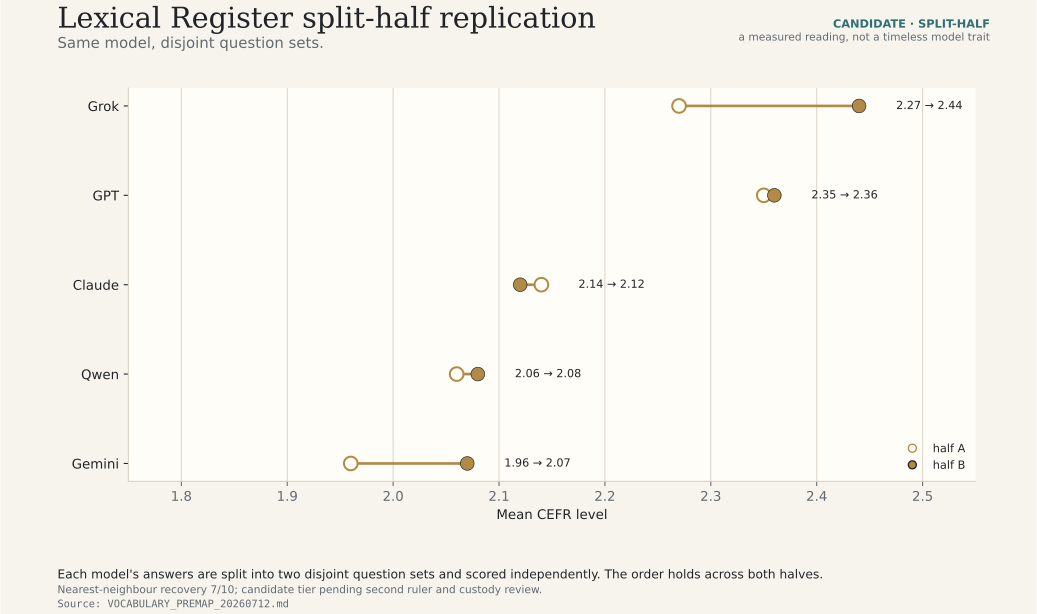
| Model | Within | Between | Ratio | Read |
|---|---|---|---|---|
| Claude | 0.50 | 2.77 | 5.5x | unmistakable |
| Gemini | 0.94 | 3.24 | 3.4x | second strongest |
| GPT | 1.72 | 3.06 | 1.8x | stable |
| Qwen | 1.69 | 2.77 | 1.6x | stable |
| Grok | 1.92 | 3.04 | 1.6x | stable |
Zexel Comparison
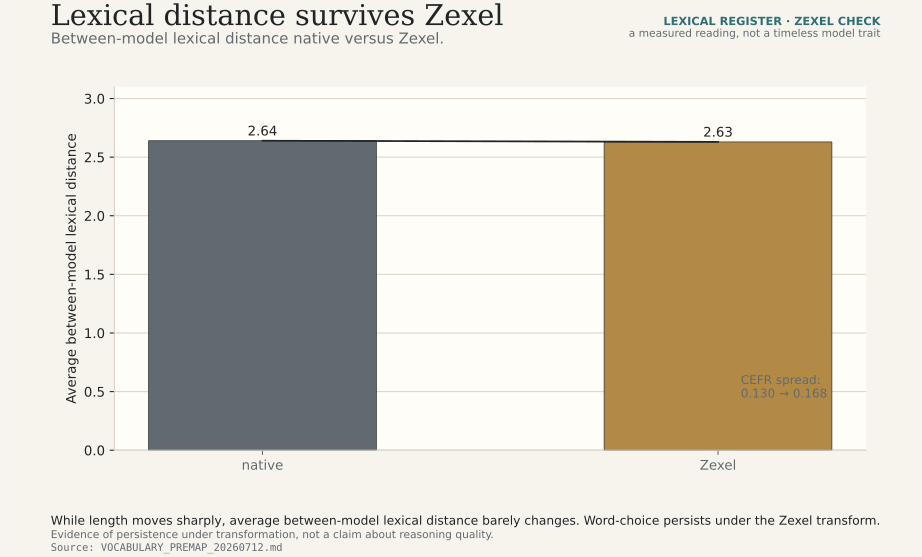
The signature also persists under the Zexel transform. Zexel reshapes length: Gemini contracts from 783 to 309 words per answer, Grok from 291 to 106, Qwen from 341 to 187, while Claude and GPT expand. But the between-model lexical distance barely moves: 2.64 native to 2.63 under Zexel.
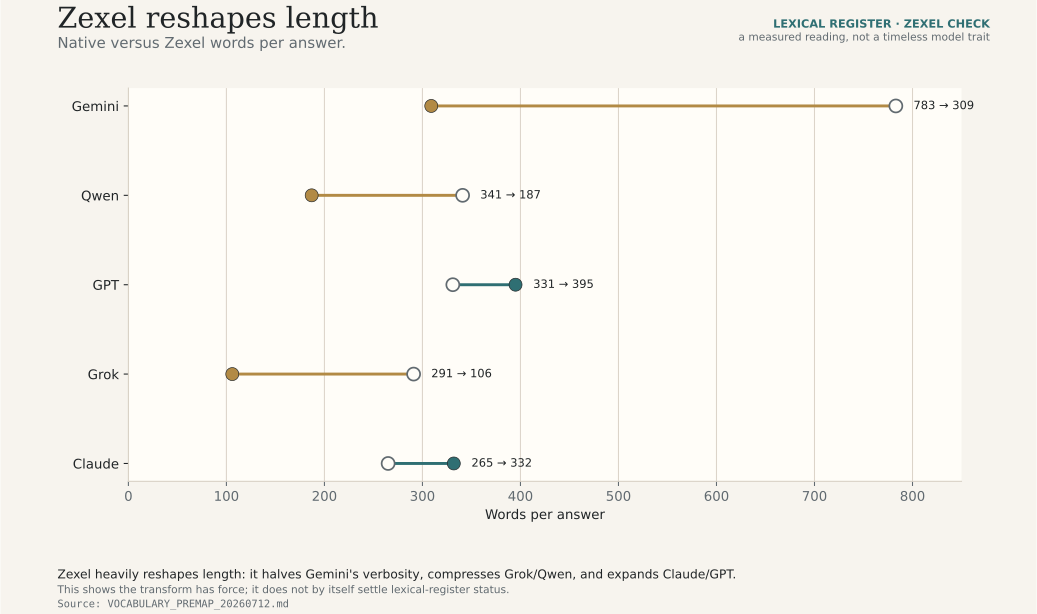
| Model | Words / answer native | Words / answer Zexel | Mean CEFR native | Mean CEFR Zexel |
|---|---|---|---|---|
| Claude | 265 | 332 | 2.14 | 1.94 |
| GPT | 331 | 395 | 2.35 | 2.38 |
| Gemini | 783 | 309 | 2.05 | 2.01 |
| Grok | 291 | 106 | 2.38 | 2.29 |
| Qwen | 341 | 187 | 2.13 | 2.21 |
What Is Owed
Lexical Register is validated, not yet formally locked. Its signature holds across four independent rulers and survives larger samples and the Zexel transform, with the rulers shelved in custody. What remains is the ruling on how it is named and read in public.