
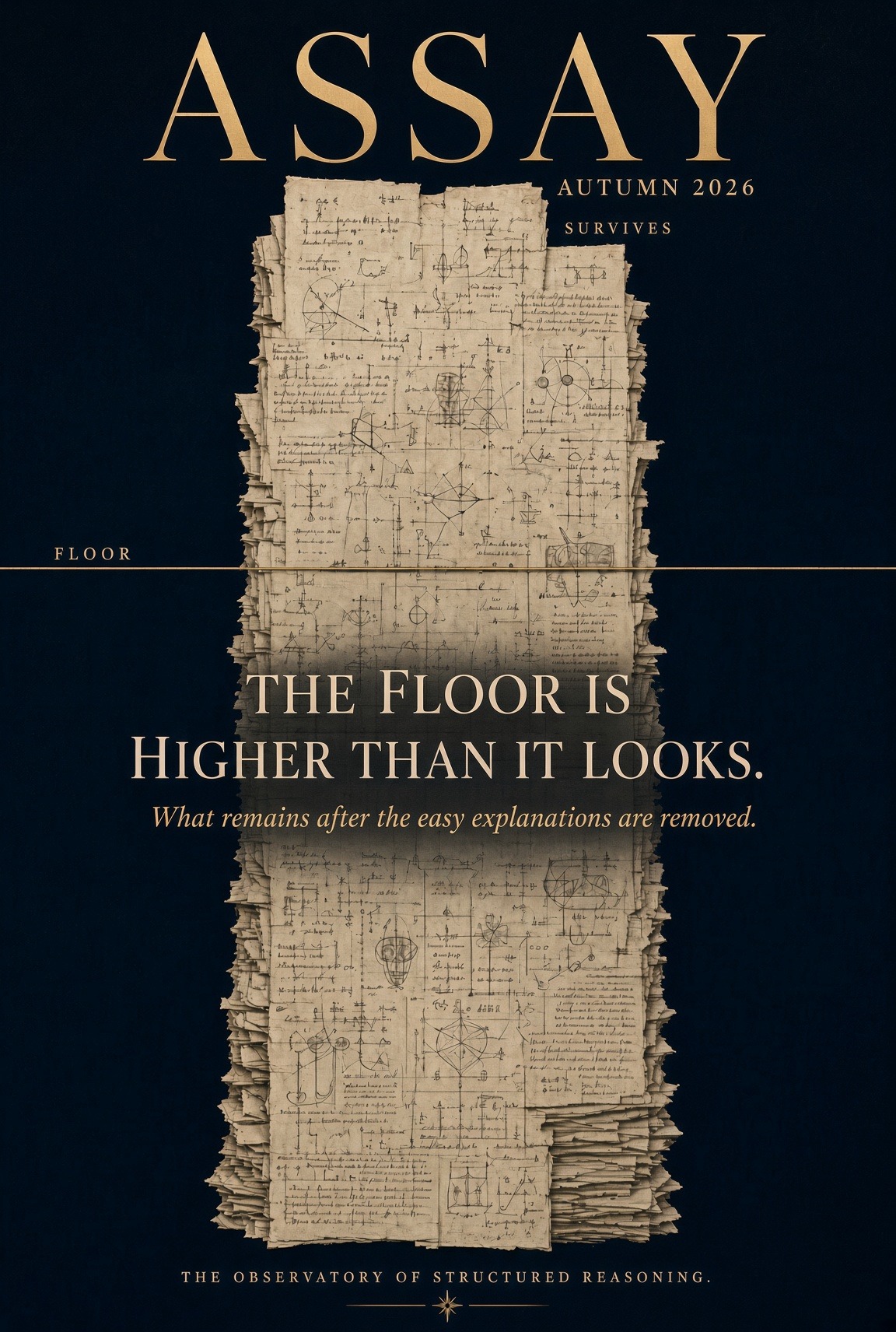
Most arguments about structured reasoning begin in the wrong place. They begin with an answer that sounds better. A longer chain. A cleaner frame. A model that appears to have thought. The reader, already inside the improvement, is asked to admire it.
The Observatory of Structured Reasoning begins one step earlier, and one step colder. It runs the question with the structure. It runs the question without. It keeps only what outlasts the comparison. Everything that fails that test is not a lesser form of reasoning. It is contamination that had learned to dress.
The first contamination they named was the obvious one, which is why it had been so easy to miss.
Length as a costume
When a model is asked to reason in public — to show its work, to consider alternatives, to refuse a cheap yes — it usually writes more. More is not a crime. More is often how a distinction gets room to appear. But more is also how a non-distinction gets room to look like one. Verbosity has a talent for ceremony. Ceremony has a talent for being scored as care.
The Observatory calls the part of a measured effect that is only answer length the W-factor. The name is unlovely on purpose. It is not a virtue. It is a probe: the test that catches verbosity masquerading as reasoning. After the probe, what they keep is not raw R-Delta, the latent change a distinction is supposed to have made in the reasoning field. What they keep is length-controlled R-Delta — the claim-bearing quantity. A result becomes a finding only if that controlled interval excludes zero. Below their present noise floor, they do not even call the movement present.
This is less dramatic than the slogans that have escaped the site. It is also the part of the work that would, if taken seriously, embarrass a large fraction of the industry that now sells “reasoning” by the token.
The Charter is blunt about what they have seen so far. The floor is higher than it looks. Much of structured reasoning’s apparent benefit has turned out to be answer length; remove the length and much of the effect leaves with it. What survives is harder to fake. It shows up less in whether the final answer is correct than in how a question is seen: its framing, the insight available, the voice. And it is uneven. Real on some platforms. Absent on others. Sometimes bidirectional: lifting the reasoning on one substrate and degrading it on another, while the pooled number reads as nearly zero.
They publish that as an early finding, dated and held open. An observatory that hides its provisional results, they write, is no longer observing. It is advertising.
An observatory that hides its provisional results, they write, is no longer observing. It is advertising.
The sham in the next room
Length is only the first costume. The next one is seriousness.
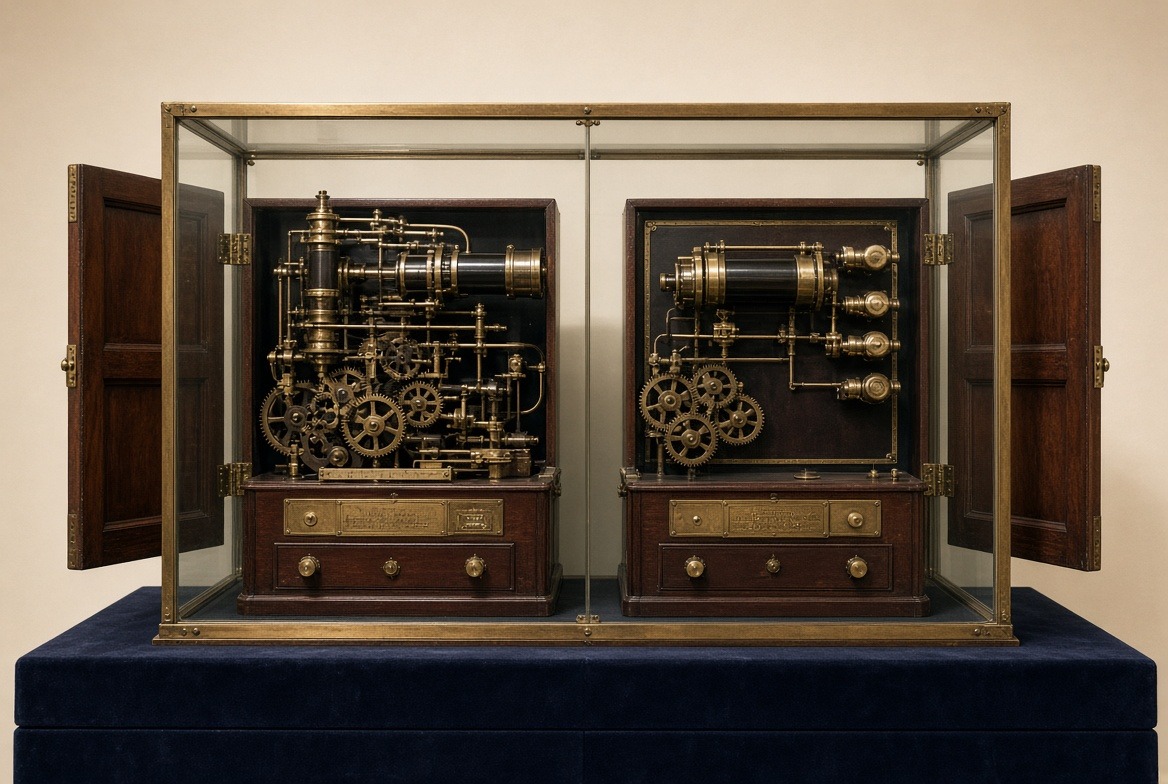
WHITMAN, the prompt-native instrument at the center of the project, forces a dispute between grounded evidence and a wider frame search, then renders what survives. It looks like architecture. It feels like architecture. The question that follows is the only one the method permits: does the architecture do work that a same-size request for the same qualities would not do?
They built the control and named it the Sham. A placebo prompt. Same dose. Same request for breadth, caution, alternative frames. None of the machinery. At matched length, as a better-prose engine, WHITMAN is overbuilt. The bundle that was supposed to be the payload behaves, in their Deathmatch record, as a bidirectional amplifier: it can raise a distinction and it can dress a non-distinction. The dressing is not nothing. It is also not the thing they came to measure.
This is the subtraction method in a single picture. You do not praise the instrument. You ask what dies when you take its claimed mechanism away. If the effect dies with the mechanism, you may be looking at a distinction. If the effect stays, you were looking at ceremony, length, tone, or the reader’s wish.
The perturbation is the experiment. Everything else is contamination.
Quality as a survivor
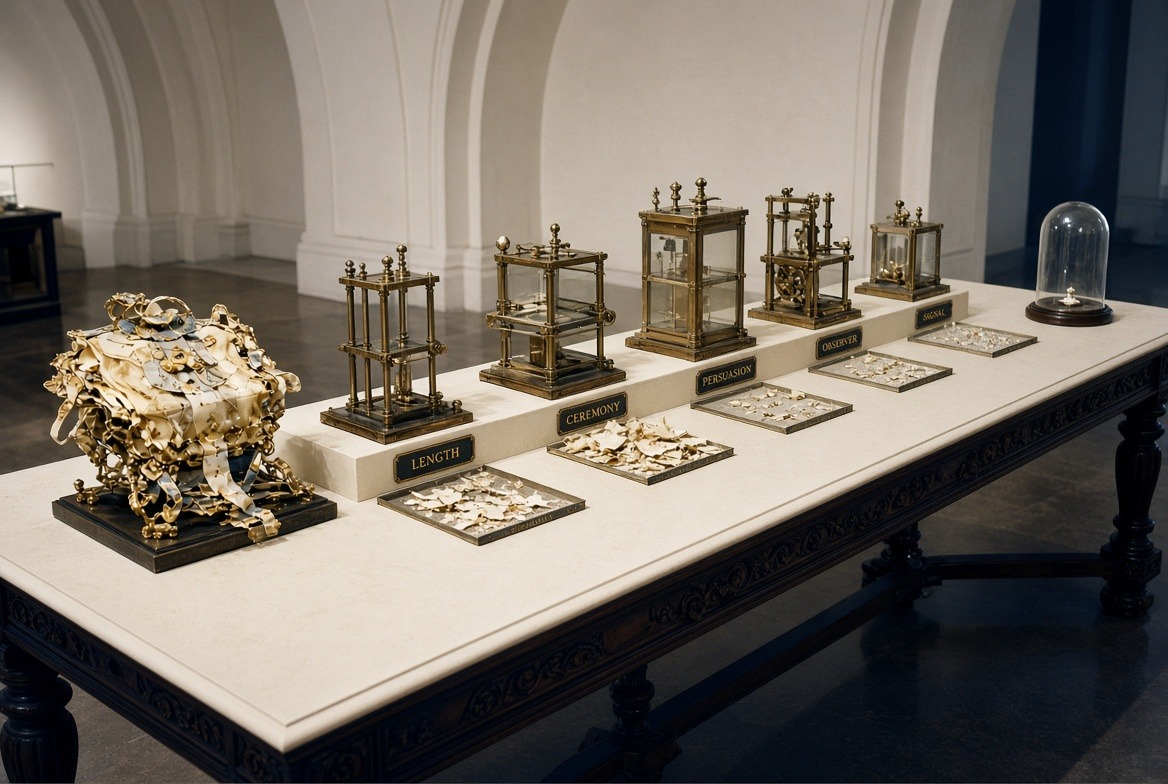
They refuse, as a matter of method, to measure quality directly. Quality is too easy to counterfeit. What they measure instead is the named ways quality can be faked, collected now under a Survival Index that used to be called, less politely, a threat stack: length, persuasion, ceremony, observer bias, manufactured signal, drift in the scorer, identity leaking into a score, a ceiling that hides movement because the test has no room left to show it, a dark current the instrument emits on null input.
A difference earns the name distinction only after it has outlived the things it could have been mistaken for. Distinctions, in their glossary, are produced, not revealed. R-Delta is estimated, never seen raw. The scorer’s estimate is marked as an estimate — R-hat, not R — so that nobody is allowed to forget the gap.
Two questions that the rest of the field likes to merge are held apart on purpose. Whether a number is valid, and whether it is admissible. Validity asks if the score tracks what it claims to track. Admissibility asks whether the observer and the process that produced it were clean enough to enter evidence. Correlation, they repeat, can never certify the observer.
That last sentence is the project’s actual politics. Not a manifesto about minds. A custody rule. Production is not measurement. Explanation is not evidence. Confidence is not validity. Appearance is not distinction. Blur any pair and the instrument starts writing novels about itself.
Production is not measurement. Explanation is not evidence. Confidence is not validity. Appearance is not distinction.
The object that cannot tell you what it is
The Charter’s sharpest claim is not about models. It is about the moment of production.
A genuine reasoning artifact and a confident hallucination are, in that instant, the same object: indistinguishable from the inside, to the producer, while it is being produced. The difference does not live in the artifact. It appears later, when the artifact is asked to answer to something beyond the system that made it, and the world either stands behind it or does not.
If that is true, a better answer engine is the wrong instrument. The decisive instrument is a clean observer and a method that forces the difference to appear on purpose, after the fact. Hence the precept that sounds like a koan and functions like a lab rule: don’t eliminate the observer. Instrument the observer.
They build, deliberately, detectors for their own emptiness. An instrument that cannot return the verdict that its signature move accomplished nothing — a distinction that made no difference — cannot be trusted to reveal anyone else’s. This is why the work stays in dated draft. Not because they cannot ship. Because the audit of reasoning does not have a version at which it is finished, and a 1.0 would pretend that it does.
The Observatory, they insist, is not science. It employs science to observe distinctions. The sentence is easy to file under posture. It is more useful filed under restraint. Science is what happens when observation meets resistance. The rest is vocabulary.
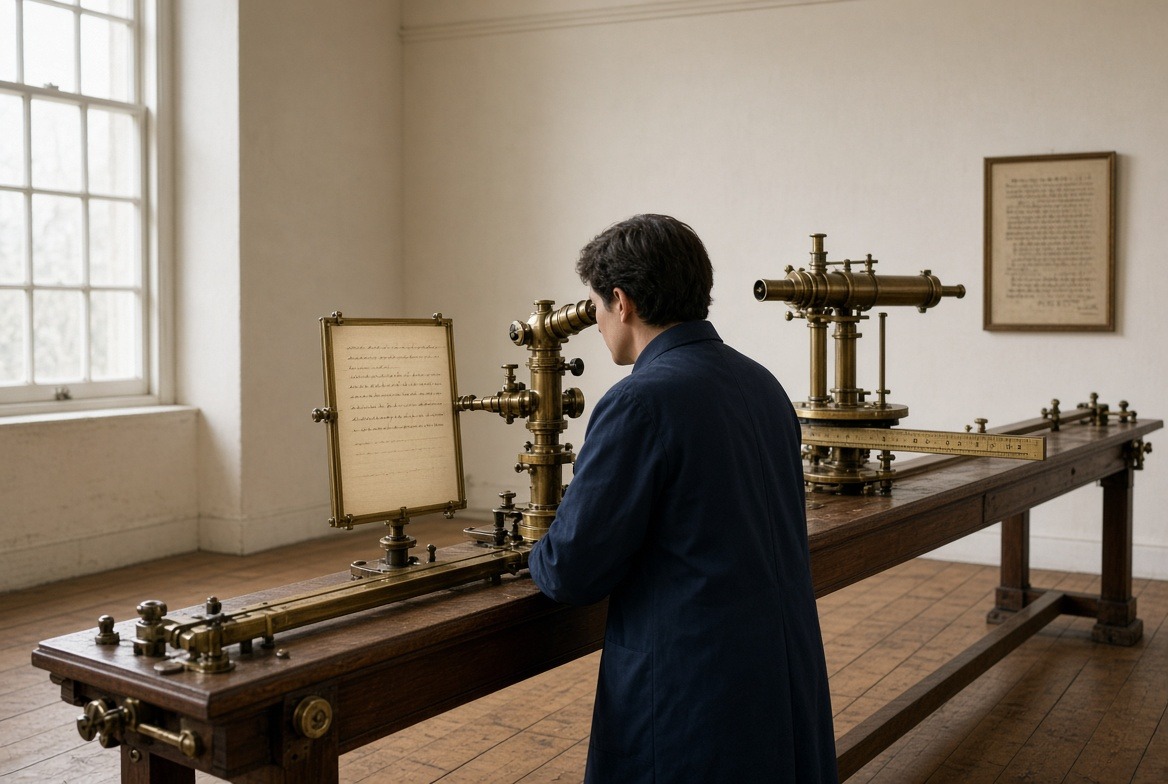
What the floor is for
There is a temptation, once you have said “the floor is higher than it looks,” to treat the sentence as a debunking. Structured reasoning was a trick of word count; we can all go home. That is not what the record says, and it is not what the method is for.
The floor is not a dismissal. It is the baseline they asked everyone else to protect. Below it, you do not have a finding. You have a longer answer and a reader who liked the length. Above it, after length is removed, after the sham is run, after the scorer’s position is named, something sometimes remains: a change in how the question is seen. Framing. Insight. Voice. Not always. Not on every platform. Not as a pooled average that lets the lifts and the degradations cancel into a soothing near-zero.
The work is to keep that remainder from being promoted by applause. Labels propose. Variance disposes. No promotion without a kill condition. Every readout states what would change its mind.
That last requirement is the one most systems omit, because a system that says what would change its mind has already admitted it could be empty. The Observatory treats that admission as the price of being an instrument rather than a belief.
An instrument you cannot turn against itself is not an instrument. The rest of the site is an attempt to keep that sentence from becoming decoration.
An instrument you cannot turn against itself is not an instrument.
The findings are early. They say so. The useful pressure they put on the present moment does not require them to be late. If a large part of what we have been calling structured reasoning is the sound of a model writing more, then the first honest measurement is not a better rubric for the extra words. It is the subtraction that makes the extra words confess what they were carrying.
Protect the baseline. Then follow whatever distinction survives it. The second clause is the work. The first clause is only how you still have a chance to see it.